Consider the Vinedresser

Martha Fletcher

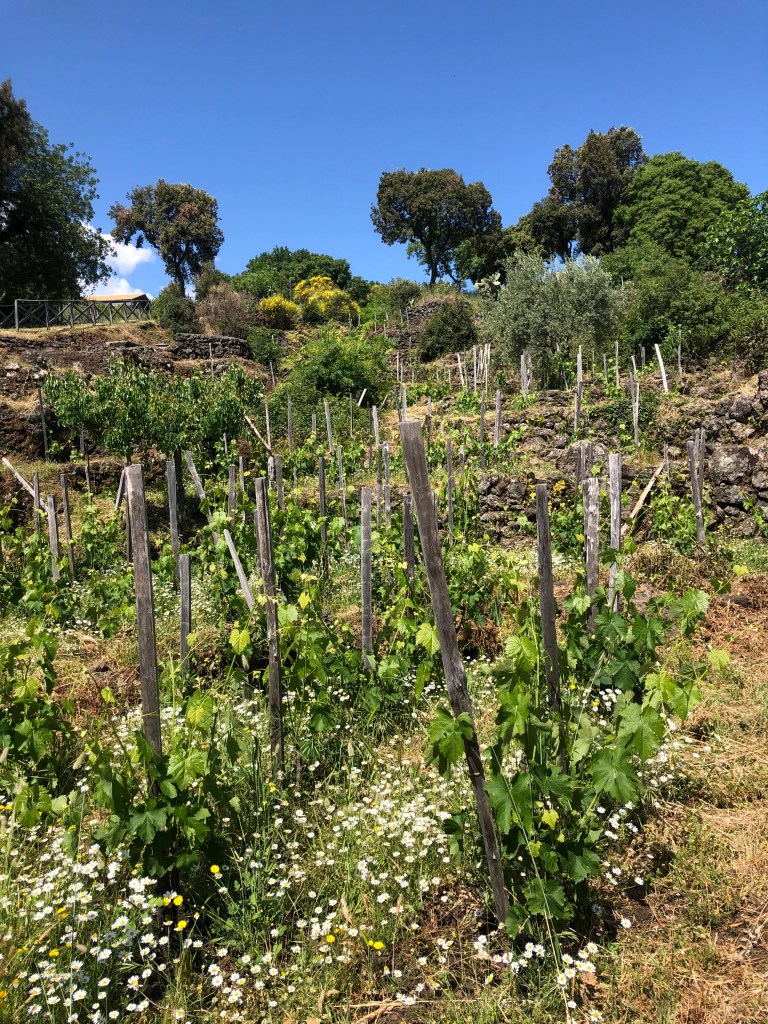
 Our scruffy Sicilian host did not initially reflect our preconceived images of the keeper of the Biblical vineyard. Where the resemblance began to take shape was as he walked among his beloved vines. He addressed them by name, not that each vine had a name, but he spoke of them as “she”. “ She is growing so well. Look at how beautiful she is. She is a hundred years old and she is still producing fine grapes.” The love that this man had not only for his vineyard, but also for the individual vines, was stunning.

 His love not only motivated him to care for them, his love cost him dearly to procure them. He described how the care for this old vineyard had been forsaken by the previous owners. Four children had inherited four quadrants of the property from their forefathers who had planted the vineyard and tended it. The children, having no interest in the constancy of work required to keep the vineyard productive, had left it untended for decades. Our host described the years of negotiation and cost to approach each owner and convince them to sell their portion of the property. He would not settle or be satisfied until he had procured the entirety of the original vineyard.

Our heavenly vinedresser has also gone to exorbitant ends to procure for Himself the entire vineyard, even in its untended, overgrown, unproductive state. From the four quadrants of the earth, he is gathering a people for Himself, from every tribe, tongue, people and nation. But it came at an exorbitant cost, His one and only Son. 

Revelation 5:9 states,” And they sang a new song saying, 

‘Worthy are You to take the scroll and break open its seals;

For You were slaughtered and You purchased people for God

with Your blood from every tribe, language, people and nation.’”

Once the vineyard belonged to our host, he went to work to restore it to become fruitful once again. He first cleared the stones that had thrust up out of the ground. He walked us past an enormous pile of volcanic rocks that had to be extracted as they interfered with the growth of his vines. He cleared stones, he removed the overgrowth of weeds and briers that were suffocating the plants, he pruned off the overgrown, unproductive branches that had been left on the vines for years, diverting the energy of the plants from bearing fruit. He optimized the soil around the plants to receive nutrients and receive the supply of seasonal rain. He tilled around the base of each vine, cutting off the superficial roots so that the plant’s roots would grow deep and access the more constant supply of water that resided well below the surface. He repaired the fencing around the property to prevent animals from coming in and ruining his crop. However, even as he described the enormous amount of work that went into restoring his vineyard, he did not describe it as a labor of drudgery, but he described it as what was necessary to see this vineyard fulfill its original purpose, the production of excellent grapes.

For our host, tending his vineyard was clearly a labor of joy and love. This resurrected vineyard is truly his delight and the vines are his individually known and cared for children! 

Our encounter with a human vinedresser gave me a glimpse into the heart of our heavenly vinedresser, our Father.  Isaiah captures this sentiment in his love songs of chapters 5 and 27. This theme is also echoed by Jesus when he took his disciples through a vineyard on his way to Gethsemane. Hear in these passages the passion of the vinedresser:

“Let me sing for my beloved my love song concerning his vineyard:

My beloved had a vineyard on a very fertile hill.

He dug it and cleared it of stones and planted it with choice vines;

He built a watch tower in the midst of it and hewed out a vat in it;

And he looked for it to yield grapes…” (Isa.5:1-2)

“A pleasant vineyard, sing of it!

I, the Lord, am its keeper:

Every moment I water it, lest anyone punish it.

I keep it night and day.” (Isa.27:3)

“I am the true vine and my Father is the vinedresser.

As the Father has loved me, so I have loved you. Abide in my love. (Jn.15:1,9)

While I don’t want to overstretch the analogy of our human vineyard owner to our Father, the vinedresser, I couldn’t help but draw spiritual lessons from some of what I observed. Not only did our host take pains and cost to procure this vineyard, and not only does he love his vineyard, but in order to make it productive, he prunes the vines and tills the soil. Tilling had many purposes. It loosens the compacted ground so that water could penetrate more readily and it creates air pockets so that the roots could breathe. I could see the parallels to principles of growth as Christ-followers in these two benefits of tilling. But it was tilling to remove the superficial roots that most caught my attention.

 Sicily has a wonderfully difficult climate for growing grapes. This vineyard on the slope of Mt. Etna receives rainfall and snow melt in winter and spring, but the summers are very hot and dry. If the vines are watered continually from above, their root systems will become superficial and will not be able to sustain the plant during the long, hot dry season. By cutting off the top roots as the dry season approaches, the vines are forced to send their roots downward into the aquifer below. The vinedresser not only prunes what grows above the ground, he also prunes what lies beneath the surface. It seems harsh, but it is for the vine’s ultimate good.

Shallow roots do not sustain a vine. Shallow faith cannot sustain us either. The loving vinedresser may need to force our roots to go deep, deep into his word, deep into knowing His unchanging character, deep into trusting His word and character when things on the surface get “tilled”, broken up, upset, chopped. The consequences of not doing this are dire. Jesus describes this in his explanation of the parable of the soils in Matthew 13.

“Other seeds fell on rocky ground, where they did not have much soil, and immediately 

they sprang up, since they had no depth of soil. But when the sun rose, they were 

scorched. And since they had no [deep] root, they withered away.

As for what was sown on rocky ground, this is the one who hears the word

and immediately receives it with joy, yet has no root in himself but endures for a while.

And when tribulation or persecution arises on account of the word, immediately he falls 

away.” (Mt.13:5,6,20,21)

The vinedresser both removes the stones and cuts the top roots so that what is pictured above does not come to pass. The application in my own life is immediate as I think back on those difficult times, deep disappointments and losses as events and seasons that over time deepened my faith in and love for Him. Were it not for those struggles, I would not know the Lord, I would not lean into Him and trust Him like I do today. 

The picture of the growth that such tilling produces is described by Jeremiah as he contrasts the desert shrub (whose root system is superficial, like the tumbleweed) to the tree.

“Blessed is the one who trusts in the Lord, whose trust is the Lord.

He is like a tree planted by water that sends out its roots by the stream,

and does not fear when heat comes, for its leaves remain green,

and is not anxious in the year of drought, 

for it does not cease to bear fruit.” (Jer.17:7-8)

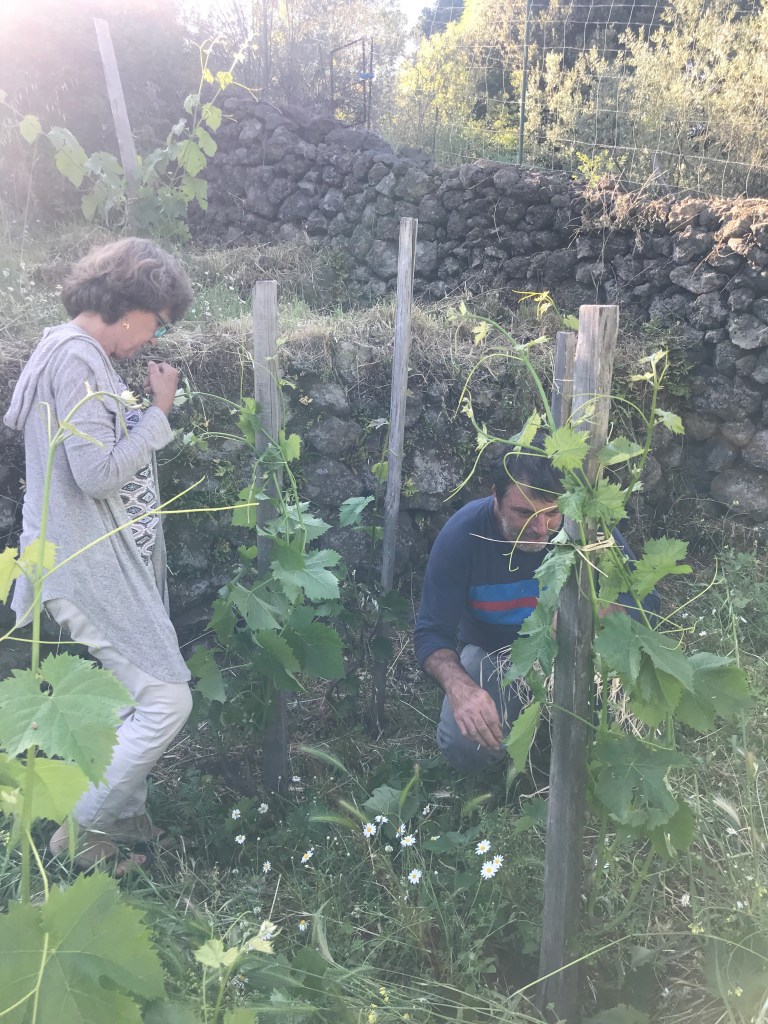
Another time that we shared with our vinedresser host occurred on the final day of our stay. It was late in the day as we were driving in to town for a few groceries, when we noticed our friend, alone, in his vineyard moving from plant to plant, stooping over each one, gathering in his outstretched arms the drooping branches and gently tying them up to a central stake. We abandoned our trip to town to join him in the vineyard. Over the next several hours, he instructed us in this critical stage of tending the rapidly growing plants. Each vine had numerous tender, leafy branches that had grown out of the woody vine. As they grew longer, gravity would pull many of these tender shoots downward. Our host shared that the branches were especially vulnerable at this stage of their young growth. A strong wind or heavy rain could easily break off the immature branches unless they were lifted up and secured. Around his waist he had a sack of natural twine. He would stoop low next to each vine, stretch out his big arms to gather the verdant and vulnerable branches and then as he held them in place, he would gently tie them to the central stake. We became his apprentices. “Don’t tie them too tightly. Just enough to hold them up.” But as he was tying up the branches, he was also inspecting them to see which ones had tiny clusters of immature grapes, which branches were suckers and which branches needed their leaves thinned so that the sun could fall on the developing grapes to ripen them. He pruned as he went and he pruned each vine uniquely. For each vine he considered both the overall health of the plant and the production of fruit. 

I have reflected so many times on the image of our burly vinedresser friend with outstretched arms stooping low to tenderly gather up the weak leafy branches in his strong arms and then gently holding them as he formed a loose knot with the twine so that they would be protected. 

John 15:2 tells us about this function of the vinedresser. “Every branch in Me that bears no fruit, He takes away and every branch that does bear fruit, He prunes that it may bear more fruit.” The common words that Bible translators use for the Greek word aero are take away. Other translators however use an alternate definition of this word aero: to raise up, lift up, prop up. The Passion translation uses this definition in John 15:2;

“He cares for the branches connected to me by lifting and propping up the fruitless branches and pruning every fruitful branch to yield a greater harvest.” (TPT)

This is what I saw. I saw the human vinedresser examining the branches, inspecting them to see that they are properly connected to the vine, and if properly connected but misoriented, growing downward instead of upward, gently lifting and securing them so that they might become fruitful.( For a deeper discussion on this see the article John15:2 “Lift Up” by Paul Bucknell at bffbible.org.)

 Have you ever lost your orientation? I certainly have – looking downward at my circumstances, growing in a worldly direction, downtrodden by a deluge of difficulties, looking for fruit and fulfillment in the wrong places, with wrong expectations. Certainly when Jesus spoke these words to his disciples, it was just before they would all abandon him, deny him and hide in fear. They were definitely disoriented branches who showed little evidence of fruit. But Jesus did not cut them off. Rather the resurrected Christ came to them, spoke peace to them, stretched out his arms to show them his scars and wounds and lifted them back to their proper orientation toward himself.

“All that the Father gives to me will come to me; and the one who comes to me I will most certainly not cast out.” Jn.6:37

Well the last experience that we shared with our vineyard owner friend was after we had spent hours with him, pruning and tying up branches. We had used up all his twine and the sun was setting. With a satisfied sigh, he gazed at his vines. “They look very good”. And then turning toward us he said, “We must celebrate our work together!”

With that we climbed the hill to our cottage. He invited other guests and workers to join in the celebration on our patio. We opened the wine that his vineyard had produced years prior and celebrated a well tended vineyard accompanied by a pyroclastic display from the top of the looming Mt. Etna. 

Our God is a celebratory God! 

On this mountain the Lord of hosts will make for all peoples a feast of rich food,

a feast of well-aged wine, of rich food full of marrow, of aged wine well refined. Isa.25:6

Blessed are those servants whom the master finds awake when he comes. Truly I say to you, he will dress himself for service and have them recline at table, and he will come and serve them. Lk.12:37

But the father said to his servants, “Bring quickly the best robe, and put it on him, and put a ring on his hand and shoes on his feet. And bring the fattened calf and kill it, and let us eat and celebrate… It was fitting to celebrate and be glad, for this your brother was dead and is alive; he was lost and is found. Lk.15:22,23,32

Let us rejoice and exult and give him glory, for the marriage of the Lamb has come and his Bride has made herself ready; it was granted her to clothe herself with fine linen, bright and pure – for the fine linen is the righteous deeds of the saints. And the angel said to me, “Write this: Blessed are those who are invited to the marriage supper of the Lamb.” And he said to me,”These are the true words of God.” Rev.19:7-9

How much more in all aspects is our Father God, the keeper and nurturer of his vineyard of souls. He purchases us and works on our behalf because he loves us. He tends us each uniquely, he lifts us up and tethers us to himself, he prunes us both above and below so that we might be strong and fruitful in Him. And he then celebrates in anticipation of the fruit that will be borne from our lives, which is our deepest joy and for his great glory. Finally, He invites us into the greatest celebration that the universe has ever known, all because of his own costly work of sacrificial love and mercy to redeem and restore an untended people. 

What do you see in this reflection?

 A new picture of our Father, the heavenly vinedresser, who lovingly works in his vineyard of souls?

 A new recognition of the work that He might be doing in your life so that you would be deeply rooted and fruitful?

 A glimpse of his tenderness toward misdirected growth and his outstretched arms to gather you up?

A celebration in anticipation of the harvest of delicious fruit from your life? 

Other vines that He longs to purchase and restore to Himself?

A Road Trip through the Letter to the Philippians

Pexels: Alexey Komissarov

The letter to the church of Philippi, written by the apostle Paul, stands out as a book filled with points of rich encouragement and expressions of pure joy. These themes may seem ironic, since this letter was written by Paul from dank Roman prison. In his writing to this beloved church, Paul discloses the principles and practices that enabled him to continue forward on his journey of faith, no matter the circumstances in which he found himself. He is neither thrown off course nor deterred in his pursuit. Pursuit of what? JESUS!

Paul is perpetually propelled by this singular desire to be as closely united with his Savior and Lord as is humanly possible in this life. He seeks to intimately know Jesus and make Him known. So in this road trip illustration of the letter to the church in Philippi, the journey begins with Jesus and ends with Jesus.

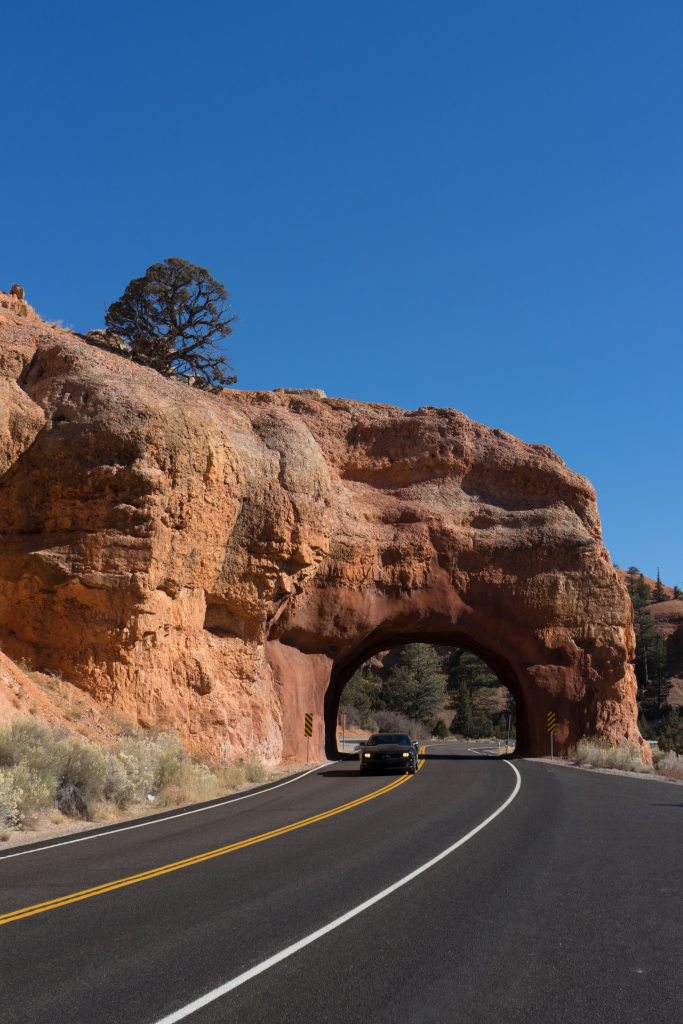
Just as any major roadway has guardrails to keep one from veering off, so too there are guardrails for Paul’s life in Christ as well: the love of God and the kingdom of God.

Fundamentally this journey is a depiction of a love relationship between our Creator and his ransomed creation; Him loving us by sending His Son to live, die and rise again for us, us receiving His love and loving Him back with our worship and obedience. Love from God and for God can’t be contained. It overflows to those around us. “It is my prayer that your love may abound more and more with knowledge and all discernment, so that you may [scrutinize those things that are of eternal value]”(Phil.1:9) Love from God and for God keeps us on the right road. This is one of the guardrails on the journey of faith that keeps him centered. Jude succinctly restates this thought in his letter saying, “keep yourselves in the love of God” (Jude 21). 

The other guardrail is the advance of Christ’s kingdom on earth. Despite writing from prison, Paul nevertheless believed that his capture and imprisonment was not an indication that God did not love him. No, the guardrail of God’s unshakable love was securely in place within his heart. Nor did he accept that his circumstances had divorced him from his calling to advance the kingdom of God on earth. He can still write letters (which we continue to be blessed through today) and he can inspire others through his boldness and confidence even as he suffers in shackles. As well,  he can make known to the whole of the Praetorian guard (to whom he is shackled) the gospel of Christ. “I want you to know brothers and sisters, that what has happened to me has really served to advance the gospel!” (Phil.1:12-14) As long as he is alive, he knows that there is “fruitful labor” for him by encouraging his fellow brothers and sisters to “strive side by side for the faith of the gospel” and to persevere in doing so himself. (Phil.1:22,27) His journey forward is secured inwardly and propelled outwardly by the love of God and the advance of the gospel.

His progress however can get side-tracked in the rotary of comparison where, instead of looking to Jesus and embracing his unfailing love and focusing his energies on advancing his kingdom, he  looks at himself and others, becoming preoccupied with comparing and competing. Paul sees clearly that “some preach Christ from envy and rivalry”. But getting sucked into comparison is like getting caught in a whirlpool; around and around we go either finding ourselves superior to others (and intent on staying there) or inferior, accelerating to push past the competitors to come out on top. Paul models his experience in the rotary of comparison by refusing to engage with those who would use his circumstance of being in prison as a way to shame him and surpass him in ministry. He doesn’t take the bait. “What then? Only that in every way, whether in pretense or in truth, Christ is proclaimed, and in that I rejoice.” (Phil.1:15-18) In adopting this perspective, he is able to exit the rotary of comparison quickly and continue on his journey.

There are those stretches of road that are terribly rough. In the midst of these stretches of suffering, Paul muses on the life of Jesus, who like him has suffered and been tempted, but even moreso. Only Jesus, in the face of his uniquely rough road, “did not count his equality with God as something to be grasped, but emptied himself taking the form of a servant. And being found in human form, he humbled himself by becoming obedient to the point of death.” (Phil.2:5-11) When he encourages the Philippians to have the mind of Christ among themselves, he is speaking from his own experience of coming to know Jesus as the one who understands the roughest of roads. If we look carefully at the rough stretch we are traveling, we can see the tracks of One who has already gone ahead of us. He is entirely qualified and willing to join us in our suffering and to send himself in others to walk with us as well. “If there is any encouragement in Christ, any comfort from his love, any affection and sympathy…” know that you are not alone.

Then there is the fuel that we need for this journey. As we pull up to the pump, one says self-serve and another says Spirit-serve. Self serve fuel will suffice for short distances but generally speaking, it gives us poor performance and before long we are completely on empty. The only fuel that can take us the entire distance is that which is supplied by God the Holy Spirit. “It is God who works in you, both to will and to work for His good pleasure.” (Phil.2:13) The mindset that depends on our own resources, talents, capabilities and intelligence for fuel will eventually leave us stranded on the side of the road. Paul evaluates his own self-serve, self-sufficient, self-generated fuel and concludes that it is rubbish. Those who worship by the Spirit of God, glory in Christ Jesus and put no confidence in the flesh are those who go the entire distance.(Phil.3:3)

The temptation to complain in the midst of persecution was present for Paul and for the Philippians. It is no different for us today. “For it has been granted to you that for the sake of Christ you should not only believe in him, but also suffer for his sake.”(Phil.1:29)  It is no surprise that persecution and suffering comes. But  Paul writes to remind them that when it does come, to “Do all things without complaining or arguing, (grumbling or questioning) that you may be blameless and innocent children of God in the midst of a crooked and twisted generation, among whom you shine as lights in the world.” (Phil.2:14,15) As I read this, I am reminded of the laments of the Israelites as they journeyed out of captivity in Egypt toward the Promised Land. It was their complaining and grumbling, arguing and questioning that caused their hearts to turn back toward Egypt and ultimately cost them their entrance into Canaan. Complaining is like taking a U-turn midway through the journey. This takes us away from faith in God’s love and divorces us from his purpose to shine his light through us in a darkened world. Rather, “Rejoice in the Lord. To write the same things to you is no trouble to me and is safe for you.” The antidote to complaining that safeguards us from its poisonous effect, is to rejoice in the Lord. Again and again he tells them to rejoice so that they bypass the U-turn of complaining.

Paul then discloses his heart motivation for his faith journey. As qualified and competent , as well-educated and well-practiced and zealous as he was in his former life as an elite Pharisee, he places these assets in the loss column, in order that he may gain Christ and be found in him. (Phil.3:8,9) For Paul, this journey is all about Jesus, being found by him, striving to be as united with him as much as is humanly possible in his short life.” Forgetting what lies behind and straining forward to what lies ahead,” Paul is not going in reverse; he is always moving forward for the sake of the One who has made him His own. (Phil.3:12) Though Paul never actually forgot that he was once a persecutor of the church, he now is a bondslave of Christ. His life is in drive and his foot is on the accelerator.

His goal is not perfection, it is direction toward the person who has clothed him in his own righteousness. If the goal is perfection, we will be tempted to pull over into the rest area of imperfection, refusing to continue on until we are sure that our performance will be faultless. Not so for Paul who acknowledges that he is still in process. “Not that I have already attained this or am already perfect, but I press on” (Phil.3:12) Rather the journey forward may be a daily endeavor of confessing and repenting but still pressing toward the goal for the prize of the upward call of God in Christ Jesus. (Phil.3:14) And that prize IS Jesus, “that I may know (fully experience) him.” (Phil.3:10)

For guidance when there is a fork in the road, Paul tells the Philippians not to listen to the voice called “Anxiety “ on their internal GPS. This shrieking demanding voice insists that they be fully in control of their destination and that they had better take the correct road or else. Or sometimes the voice of  Anxiety will speak in a downcast, depressive tones, convincing them that their journey is terrifyingly precarious and that they will surely take the wrong road, get lost or worse. So the best course of action is no action. They had best pull off now and call it quits. However there is a different voice on our internal GPS. The way to tune in to this voice is through prayer and petition with thanksgiving. The the voice called “Peace of God” will gently lead us as we drive and at the same time guard our hearts and our minds in Christ Jesus.(Phil.4:6,7)

When our minds wander and we become less attentive to our driving, there is a rumble strip of the mind that is intended to wake us up before we veer off the road. Sometimes our minds wander and our eyes are drawn to the neon signs alongside the road. It would be tempting to pull off and gratify some desire at one of these establishments. Do they make false, cheap promises? Are they satisfying needs in a way that cannot be described as pure or lovely or admirable? Do they tempt us to join in critical or judgmental chatter that is anything other than excellent or praiseworthy? “Whatever is true, noble, right, pure, lovely, admirable, excellent, praiseworthy, we are to meditate on these things and the God of peace will be with us. (Phil.4:8,9)  The rumble strip of these virtues alerts us to evaluate what our minds are tending toward. If those tendencies are left unchecked, they can cause us to drift off course, away from the love of God and the pursuit of more of him and his righteous kingdom. 

Doesn’t everyone need some music for the journey?The radio station to tune in to is the Rejoice in the Lord station. Some of the top hits that it will play are, “Rejoice in the Lord Always and Again I say Rejoice”, “I Pray for You with Joy”, “Yes I will Rejoice”, “I Thank my God” just to name a few. These timeless classics will help the miles roll by.

 The finish line finally comes into view. Paul began his spiritual life with Jesus and he ends with Jesus. What will this final stretch of road be like? For Paul, he has learned a secret, so that no matter the outcome, he can be at peace. “I have learned in whatever situation I am to be content… I have learned the secret of facing hunger and plenty, abundance and need.” (Phil.4:12) No surprise, the secret is, Jesus. “I can do all things through him who strengthens  me.” (Phil.4:13) He has learned that this Jesus who turned his life upside down on a Damascus road, would walk the whole road with him and supply him with all he needed to finish the course marked out for him.

But what is this that he sees beyond the finish line? Home, his true home. Our true home.”Our citizenship is in heaven and from it we await a Savior, the Lord Jesus Christ, who will transform our lowly body to be like his glorious body by the power that enables him even to subject all things to himself.” (Phil.3:20,21) It was his faith filled anticipation of his final destination that gave Paul hope. It was this vision of being greeted by the Lord Jesus Christ himself, who would absorb all his wounds and weaknesses, transforming him to finally be like him and to bask in his glory, that gave him hope. Us too. Our true home awaits and no eye has seen, no ear heard, nor the heart of man conceived what God has prepared for those who love him.

Perhaps as you read this, you can identify with a particular part of the journey. Perhaps you are on rough road, and have been for quite some time. Look for the tracks of Jesus traversing this same difficulty ahead of you. Listen for his comfort and counsel. Find his presence in a companion who will walk with you.

Perhaps you find yourself caught up in the rotary of comparison, with your eyes on those around you. It is particularly difficult to get our eyes off of those who have unfairly gained some advantage. Or perhaps you view those around you as more spiritual, more qualified, more gifted, more competent and in this way it is hard to move forward. What does Jesus see? What does Jesus say about who you are and who they are? What is saying about his love for you and about his purpose for you in advancing his kingdom?

Perhaps you keep filling your tank with more self-serve fuel and find yourself running dry? There is a pump within called Spirit-serve and its supply is inexhaustible. Luke 11:13 states, “how much more will the Heavenly Father give the Holy Spirit to those who ask.”

Ask him to lead you to this pump.

Perhaps you are distracted by the flashing neon signs on the side of the road that tempt you to pull off. Does what they offer pass the test of the rumble strip? Is it true, is it noble, is it right? Is it pure and lovely? Is it admirable and excellent? Will it be praiseworthy?

If it does not meet these criteria, isn’t it best to pass by? The desire and strength to pass by are available through him. “I can do all things through Christ who strengthens me.”

Perhaps you need to find another voice on your internal GPS other than “Anxiety”. There is a voice called Peace. It passes and surpasses understanding given the confusion that is inevitable on this journey. This voice is accessed over and over again through prayer, making your requests known and giving thanks.

The gate is narrow, the road is hard, but the journey is worth it! And the reception at the finish line and beyond defies description. I hope that you will receive encouragement, help and hope to continue on the journey marked out for you, looking to Jesus all the way.


Consider the Vineyard

On a recent trip to the Etna region of Sicily, the accommodation for my husband and I was in the cottage of a vineyard owner. In viewing the pictures on the Agriturismo website, it seemed to appeal to our seeing-what-local-life-is-like preferences when we travel. The almost impassable driveway was well worth it as we found that the pictures could not do the setting justice, finding ourselves perched above terraced grape vines overlooking the Aegean Sea and in the shadow of an awakening Mt. Etna. 

We then met the vineyard owner, our host, for a vineyard tour and wine tasting event. The grape vine terraces near the cottage were only one of his plots. Another larger one was where the tour took place. It was here that our scruffy Sicilian host morphed into a savant as his passion for his vineyard, the environment around his plants and the wine they produce became evident. 

“She is about a hundred years old and she still produces beautifully”, he remarked as he introduced us to one of his beloved vines. 

 Procuring this vineyard required time, expense and diplomacy on the part of our host. Its cultivation had long ago been abandoned by the four descendents of the original owner, who had no interest in continuing its production. Our host described how he approached each family member and over time was able to negotiate the purchase of the entire property. That is when his work began to restore these ancient vines to fruitfulness. How did he do this?

Around the base of each vine, the soil was pushed back to form a bowl. This was done between October and May to capture as much precipitation as possible and direct it toward the roots. At the end of May, the bowls would be filled in with soil to retain the moisture that had been gathered from evaporating under the searing summer sun. He used no irrigation and instead depended on the rain to be sufficient. To strengthen and deepen the root system, he would till around each vine, removing the weeds but also removing the shallow roots. He did not want the vine to depend upon a shallow root system and by removing them, forced the deeper roots to draw from a more stable moisture supply. “I mustn’t spoil them by offering water. Then their root system will not be strong enough to take them through the long, hot summer.” he explained.

We walked through terrace after terrace, descending through his vineyard interlaced with fruit trees, olive trees, herbs and flowers. “I want to preserve the biodiversity of this land because all of the plants and the insects and animals, they are interdependent.” 

He talked about the plants, the land, the harvest, the process of converting grapes into wine, very fine wine. He even spoke about sleeping in the vineyard as the grapes neared readiness for harvest. “I stay here to protect the harvest since I have had thieves come in to steal my grapes!”

Hearing this vineyard owner’s passion and seeing the work of his hands, it became clear that this was not our host’s hobby, it was not his business, it was his love. He loves his vines. He is a vinedresser. I was walking alongside and talking to a living depiction of John 15 and Isaiah 5. 

Later during our stay at his cottage, we saw him working alone among the vines on the property. We joined him to see what needed tending. It was the time of year to tie up the developing branches lest they be damaged by the wind at this tender and vulnerable stage of their growth. Stooping low with his arms outstretched, he would gently lift and and gather the branches that already had tiny grapes beginning to develop and with a natural twine loosely tie them up to a central post. He would also inspect the branches and those that were fruitless and growing below the former pruning cuts, he would remove along with excess foliage. “These are suckers and even though they appear to be leafy and healthy, they will drain the energy of the plant away from the developing fruit.” And so we walked from plant to plant, inspecting each one, carefully securing the delicate but fruitful branches and removing those that would divert the plant’s resources. Each plant had to be individually assessed, uniquely pruned, delicately tied. 

After an afternoon of successful work and timely tending, it was an occasion to celebrate. The vinedresser gathered his guests and workers (on our patio, with our wine) to celebrate the day’s work, to relax in the beauty of the natural surroundings and to enjoy each other’s company. He also generously recompensed us for our availability to host his celebration 🙂

In learning from, walking with and working alongside an actual vineyard owner who knows and cares for his vines, I could only imagine how much more the Father cares for His vineyard of living souls.

During our stay and upon our return, I compared the imagery of vines and vineyard owners in scripture with what I had seen and experienced in Sicily. This has led me to write about each of the main characters:  the vineyard owner, the vine, the branches and the fruit. I hope that these insights will propel your own study, to see if these things are so. 

 Who do you think each of these characters represents in the allegory of the vine and vineyard?

Are there any elements in the description above of our experiences in Sicily that shed more light on what the writers of scripture might have intended their readers to understand about the character of God and our relationship with Him?

If you read the posts about each of the characters in the vineyard allegory (I hope that you will) my hope is that God will reveal His desire to be as intimately related to you as the branches are to the vine.