Consider the Vine

There are multiple characters in the allegory of the vineyard in scripture. There is the vineyard owner, also known as the vinedresser. There are also the vine, the branches, the sap that flows from the vine to the branches and finally the fruit. Let’s consider together the second character in this depiction, the vine.

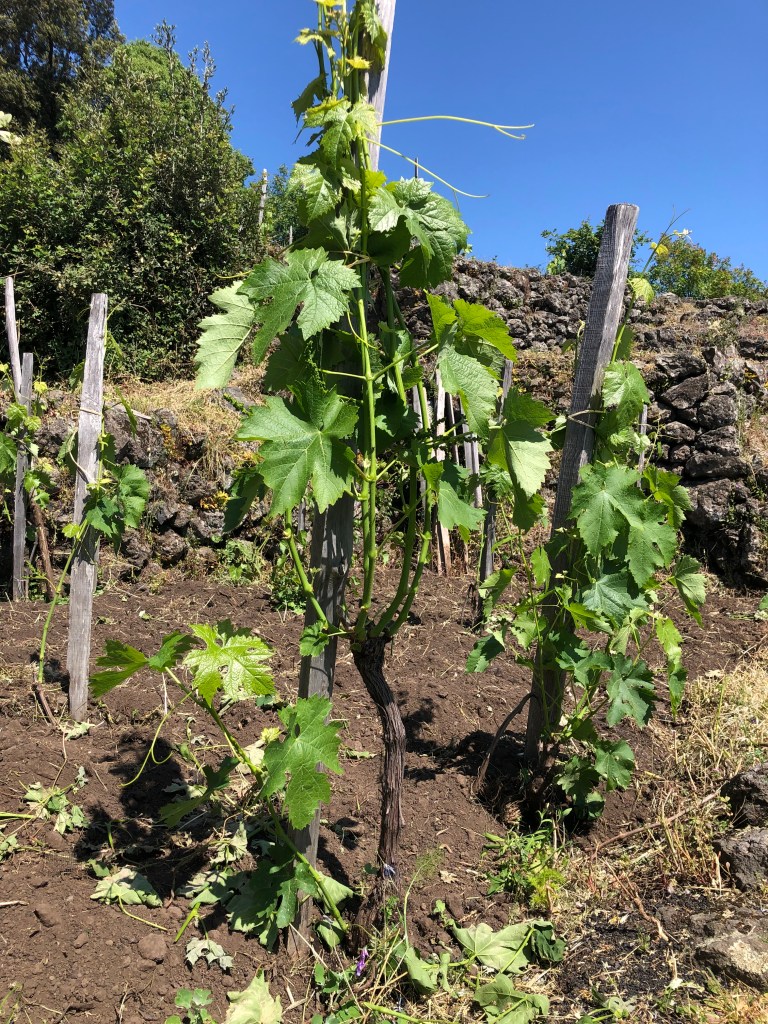
As we walked with our Sicilian vineyard owner friend among his beloved vines in mid- May, they weren’t much to look at. They were all sprouting light green supple branches, but the vines themselves were gnarled and covered with shaggy brown bark. It was a bit of a surprise to hear our host Ooo and Ahh over their appearance, “Isn’t she beautiful?” Some were upwards of a hundred years old and certainly looked it, bent and curved under the strain of years of growth. But beauty is as they say in the eye of the beholder and this vinedresser appreciated the beauty of each of his vines as they responded to his care and rewarded him with exquisite grapes. 

As Jesus led his confused disciples from the Passover meal to the Garden of Gethsemane, many believed that they walked through a vineyard as they crossed the Kidron Valley. In the midst of the vines, on the night of his betrayal and arrest, he spoke these words,

“I am the true vine and my Father is the keeper of the vineyard… I am the vine and you are the branches.” Jn.15:1,5 I am the vine, I am the true vine. 

Jesus, the true vine, was beautiful in the eyes of His Father. But to the world, he was merely a gnarled, shaggy, unattractive man.

“ For he grew up before him like a young plant,

And like a root out of the dry ground;

He had no form or majesty that we should look at him,

And no beauty that we should desire him.” (Isa.53:2)

And yet it is through this One, who called himself the true vine, that all the riches of God’s grace and mercy, all the privileges of adoption and inheritance, all of the fulfillment of bearing fruit that will remain, emanates. 

The only means for the vinedresser to receive the fruit of the vineyard, the only way for the branches to bear and carry fruit, is through the vine. The vine is the source of nourishment. The vine is the source of support. The vine is the conduit through which all that the branches need is delivered. Apart from the vine, the branches can produce nothing. All the benefits of the vinedresser’s nurturing, watering, fertilizing and tilling are received by the branches through the vine. 

As we walked with our host through his vineyard, watching as he tended and tied up the branches, we noticed that he examined each vine to see the place from which the branches were growing. “All the branches that are to be kept grow from above the pruning line. All those that grow below are suckers and need to be taken off.” On each of his vines was a place where at some point in its growth it had been cut off and all the new fruit-bearing growth emanated from above that line. The pruning line was the point of demarcation to distinguish between true branches and suckers.

The point of demarcation for the first disciples and every disciple of Jesus since then, is the cross of Christ, where the Son of God was cut off so that we, the branches, might have life. All true life emanates from this point. 

“By oppression and judgment he was taken away

and as for his generation, who considered

that he was cut off out of the land of the living,

stricken for the transgression of my people?” (Isa.53:8)

The apostle Paul, repeatedly and emphatically testified and taught that the cross, where our Lord sacrificed his life on our behalf, being cut off out of the land of the living, is the only source for our lives as “true branches of the true vine”.

“But far be it from me to boast except in the cross

of our Lord Jesus Christ, by which the world has been crucified 

to me, and I to the world.

For neither circumcision counts for anything nor uncircumcision,

but a new creation.” (Gal.6:14,15)

The new creation begins where the true vine was cut off. Any other connection point to the vine was deemed invalid by the vineyard owner. No matter how lush those branches appeared, he removed them. “They must be connected to the vine above the pruning line,” he insisted as he cast the verdant suckers off. We too must be connected to the life of God through the death of his one and only Son. This is where the new creation life begins. This is where fruit bearing life is made possible.

Some of the vines in the restored vineyard were upwards of a hundred years old. Year after year new branches came and after a season of fruitfulness, they died back and were removed. But the vine remains as the enduring source of life for all branches past, present and future. 

Jesus is the true and oldest vine, the source of our life, our vigor, our fruitfulness. It all comes through Him. Without the vine, there is no life. 

“In the beginning was the Word, and the Word was with God, and the Word was God. All things were created through him… In him was life, and the life was the light of men. ( Jn1:1,3,4)

And from his fullness, we have all received grace upon grace. (Jn.1:16)

All that we need for eternal life and fruitful life is supplied through the vine. All we are to do is to receive and live in his supply of grace upon grace.

What about you? What is your relationship like with the true and oldest vine, Jesus?

Consider the Branches

On our trip to Sicily, our accommodations were overlooking a rugged, terraced vineyard. Our host was the owner and keeper of the vineyard. Our time there gave us an in depth, real life experience of John 15, which records Jesus giving his disciples a final depiction of his relationship with them. “I am the true vine and my Father is the vinedresser.” In previous posts I have coupled my insights from a Sicilian vineyard with John 15’s imagery of the Father as the vinedresser and Jesus as the true vine. A third character in the allegory of the vineyard is the branches. Verse five states, “I (Jesus) am the vine; you (his disciples) are the branches.” 

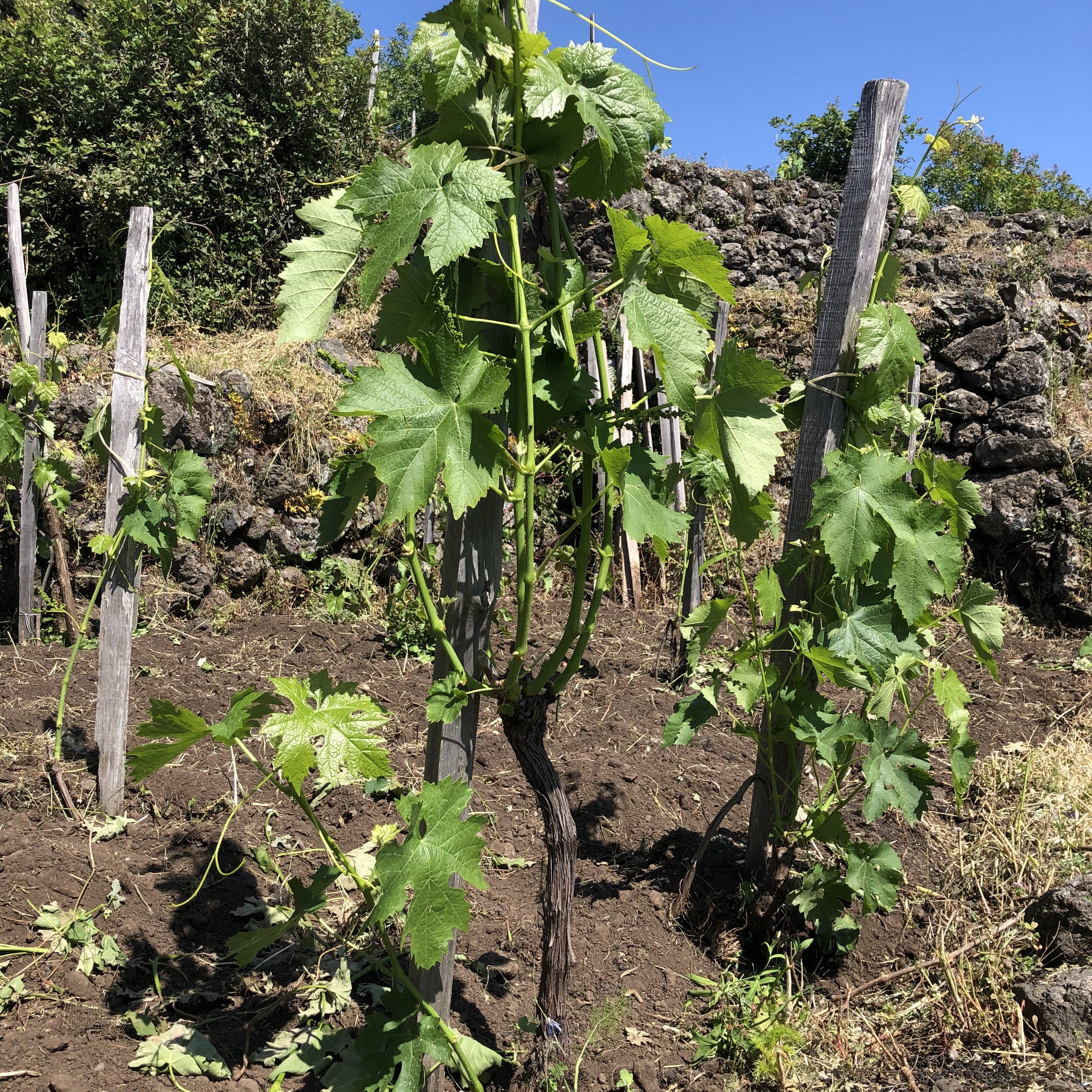
We intercepted the growth of the vineyard in mid-May. The branches, emerging out of the vine were young and supple, sprouting bright green leaves and tiny grape clusters. The branches that would be kept and protected were those that were connected to the vine above the pruning line (see Consider the Vine post). At this stage of their early growth, the slender branches were particularly vulnerable to wind or heavy rain detaching them from their fragile connection to the vine. So our vinedresser friend tenderly lifted up these young branches and gently tied them to a central stake so that their growth in connection to the vine would be protected and deepened as the branches matured and the grapes grew heavy.

Everything that the branches receive for growth and fruit bearing is dependent upon a secure connection to the vine. In John 15 Jesus used the word abide ten times in verses one through ten to describe this vital connection. Abide is a poorly understood English word. The Greek word “meno” can also be translated, to dwell, to maintain unbroken fellowship with one, to put forth constant influence upon one, holding and maintaining unbroken communion. These additional descriptions fill out an understanding of what it means to abide. 

“Abide in me and I in you. As the branch cannot bear fruit by itself, unless it abides in the vine, neither can you unless you abide in me.” (John 15:4)

The point of connection between the vine and the branch is critical. It is a connection that needs to be maintained, protected and deepened so that sap may freely flow up through the vine and into the branch. A weakened or partial connection means limited flow of sap from the vine into the branch, which results in poor growth, less fruit.

 Unlike vegetative branches, human branches have responsibilities in maintaining a vital connection of unbroken communion with Jesus, the true vine. “If you abide in me and my words abide in you…” Having his words “put forth constant influence upon us” is one of the ways that the vital connection between the vine and the branch is maintained and deepened. His words are living, carrying his very life, transforming us as we allow them to flow through our minds so that they may become written on our hearts. Through reading and study, memorizing and meditating on his words, which are contained in all of the Bible, our connection to him becomes more and more secure. 

Another way that the connection between a human branch and Jesus the vine is deepened is by abiding in his love. 

“As the Father has loved me, so I have loved you, abide in my love.”

John the apostle repeats this thought in his letter of 1 John.

“So we know and believe the love God has for us. God is love and he who abides in love, abides in God and God abides in him.” (1 John 4:16-17)

  Abiding in God’s love is as essential to our connection, communion and spiritual vitality as sap is to the branch. Without it we wilt under duty, shame and condemnation. Knowing about God’s love is comparatively easy; believing it can be quite another matter. For me as a young follower of Jesus, I recognized that I could know facts about the love of God, but believing that his love applied to me was much more difficult. However I knew that without having a growing trust that believed in his love, I would be perpetually stunted in my growth.  So I asked him to help break open the barrier between my head and my heart, so that what I gained in knowing about God’s love in my mind and through my experiences might become an unshakable belief within the depths of my heart. I continue to ask to know more and believe more deeply in the love of Christ, its length and breadth, its height and depth, so that I might be a fruit filled branch.

Yet another way that we deepen our connection and open the channel for his life to flow through us is by obeying his commands. Obedience can be simply understood as trusting what God says and doing it. 

“If you keep my commandments, you will abide in my love, just as I have kept my Father’s commandments and abide in his love. (John 15:10)

“If anyone loves me, he will keep my word, and my Father will love him, and we will come to him and make our home with him.” (John 14:23)

These words flow back and forth into one another; keeping his word, remaining in his love, abiding, making our home with him. It is hard to see where one begins and another ends. Keeping his word is love. Love is keeping his word. Obedience is abiding in his love. Abiding is a loving result of obedience. Rather than creating an equation to determine what is a result of which, there is an organic, fluid transfer of life and love, submission and dependence, trust and belief. Just as the branch trusts the vine to supply what is needed and is satisfied with its need to be deeply connected to and dependent upon the vine, so too we as living branches are to become enmeshed into the life of Christ through believing, trusting, submitting to and obeying his commandments. James writes about these same thoughts in this way,

“But be doers of the word and not hearers only… the one who looks into the perfect law, the law of liberty, and perseveres, being no hearer that forgets but a doer that acts, he will be blessed in his doing.” (James 1:22,25)

The blessing of being a doer of the word is his promise to make his home in us, his life, his love, his spirit is all that we need.

As branches of the true Vine we have looked at our part in securing our connection to Jesus: abiding in his word, abiding in his love and keeping his commandments. Along with these, we are also invited to ask.

“If you abide in me and my words abide in you, ask whatever you wish, and it will be done for you.” (John 15:7)

“You did not choose me, but I chose you and appointed you that you should go and bear fruit and that your fruit should abide, so that whatever you ask the Father in my name, he may give it to you.” (John 15:16)

My first ask is for his help with the above three elements of abiding. I need his help, strength, courage, discipline, trust, etc. to abide in his word, abide in his love and to obey his word. Even these are not within my capability to fulfill. God knows that. 

“For apart from me, you can do nothing.” (John 15:5)

A plant branch is able to a certain extent to supply some of its own needs through photosynthesis from the leaves. Nevertheless, if it is cut off from the vine, it will wither and die. Of course we all can do certain things to maintain our practical lives and our spiritual lives. But fundamentally, if we are severed from Christ, his power, his strength, his love, his grace, we will fail and fall. “Such branches wither, are gathered, thrown into the fire and burned.” (John 15:6) Of course we need his help and life even for those things that he calls us to. I need his focus and discipline as I try to read scripture in a way that allows him to speak through it. I need courage and trust to obey his word, especially when it runs counter to my own thoughts or feelings. I need his help to believe the depths of his love and forgiveness, especially when I have messed up or failed in some way. We are instructed to ask, and to keep asking. Our asking is not met with reluctance or begrudging but with willing generosity that flows from his abundant grace.

“Ask and receive, that your joy may be full.” (John 16:24)

As we walked through the vineyard, securing the spring branches, removing suckers which would draw precious energy away from the production of grapes, our friend also removed many of the leaves that might shade the developing grapes from the sun. Pruning. It is a seemingly cruel practice and yet it is an absolute necessity no matter what crop is being grown. 

“Every branch that does bear fruit he prunes, that it may bear more fruit.” (John15:2)

All gardeners must learn this harsh practice of removing what appears to be perfectly good growth for the sake of even better growth, be it flowers or fruit. The vinedresser knows what he is doing and though it appears for a time to be hurtful to the plant, it will actually allow the plant to grow fuller and become more fruitful. I thought that my career would be my most fruitful expression until it was pruned and redirected toward raising children. At the time, this pruning was painfully received by trusting that my Father knew what he was doing. Little did I know, nor could I have imagined six children and 10 grandchildren later. Indeed the pruning shears cut deeply into all of his branches, lopping off dreams, possessions, relationships, capabilities… many of which seem to be perfectly good and healthy and beautiful. I do not mean to trivialize the pain of these losses. Pruning is seemingly cruel and unnecessary. Getting to know and trust the Vinedresser and his Vine is crucial in receiving the benefits of the pruning. 

What about you? 

How is your connection to the Vine? Is it deepening? Are there areas in which the connection is weak? Is it in the area of abiding in his love? How are you allowing his words to abide in you? Are you well connected to Jesus by doing what he is asking? Have you acknowledged your need for his help and have you specifically asked for his help? Is there a circumstance in your life that feels like pruning? How are you at receiving his pruning? 

Can you trust the Father’s intentions as you go through a period of loss?

Life as a branch of the true vine is not easy, but it is good and satisfying. Through our lives the Father will receive glory and this is our greatest and most honorable purpose! 

“By this is my Father glorified, that you bear much fruit and so prove to be his disciples.” (John 15:8)