How to Fight God’s Way: Principle 6

Ask for Direction

Make known to me the way I should go. Ps.143:8

Once we trust him, we are in a position to ask for his direction. It is easiest to take advice, when the advice given basically agrees with what we were thinking. It is quite a bit harder when the way that God is indicating is his way to fight our battle, seems illogical. Do I truly trust that God knows better than I do how to defeat my enemies even when his direction doesn’t make sense? Scripture is full of examples of those who listened to God’s unorthodox battle plans: David confronting the giant with a sling and stones, Moses’ arms being supported by Aaron and Hur so that Amalek might be defeated, Jehasophat sending out the worshippers to lead the battle, Joshua marching around the walls of Jericho seven times, Gideon sifting his fighting force to 300. In God’s training our hands and fingers for battle, he may lead us to employ unexpected, unconventional strategies. 

With one of my children the battle to expose what was causing her behavior was waged in fasting and prayer. With another child, the battle was waged with love. This became clear when the Lord spoke these words to my spirit; “You need to love him and I will discipline him”. In my own fight against fear, the battle was fought with the proclamation of scripture. In another arena, I am contending in prayer with others for our children’s spiritual lives. In my marriage, I have been exhorted to speak the truth in love rather than hiding and absorbing what might be unpleasant to share. I have written letters to politicians, anointed spaces with oil and invoking the presence of the Holy Spirit, read scriptures aloud, sung, knelt, cried. 

In asking for direction, be prepared for an answer you might not have expected.


How to Fight God’s Way: Principle 5

Trust his love

Let me hear in the morning of your steadfast love,

for in you I trust. Ps.143:8

 Before David listens for the answer to his dilemma or sees deliverance from his enemies, his deepest need is to be assured once again of the faithful love of his God. David truly was a man after God’s own heart and his heart’s desire, morning after morning, was to affirm and be tethered to God’s unfailing love. His crying out to God was borne out of his surpassing need for an intimate, secure, unsullied relationship with the God whom he loves. The God whose love is unfailing is the God whom he can trust.

Do I trust wholly in God in the midst of my battles? Do I trust his wisdom; do I trust his strength; do I trust that his intentions toward me are good; do I trust in his unfailing love? It is difficult if not impossible to ally ourselves to a God whom we do not trust, whose love we doubt.

This is the battle within the battle. Often when we face adversity and enemies, there is the temptation to question whether God truly loves us. “If he loves me, why is this happening?” “If he loved me, he would have delivered me by now.” The battle within the battle is to continually seek to be reminded of God’s promised, unbreakable, unfailing love in Christ and to believe that it is true. Romans 8:35-39


How to Fight God’s Way: Principle 4

Watch and Listen

Answer me quickly, O Lord!…

Hide not your face from me…

Let me hear in the morning of your steadfast love… Ps.143:7,8

Implicit in seeking God is that we are available for him to answer us. We expect him to respond; we expect to see and hear with our spiritual eyes and ears; we will remain in a posture of expectancy even though we are dangling on the precipice of despair, like David, who lets God know that his spirit fails! He finds himself hanging on by a thread in the face of his enemies. This battle is difficult and very real. David is a real man, with real emotions, calling out to the real God, but he is not sure how much longer he can hang on.

 I have certainly found that the cacophony of the battle, whether it is internal or external, has obscured my ability to see and hear. For me, I need to withdraw into silence and solitude, often in the late night hours, when the household is asleep, to begin to hear a voice other than my own cry for help, and see more than the enemies arrayed against me. Silence, scripture, solitude are ways for me to see and hear.


How to Fight God’s Way: Principle 3

Earnestly Seek God

I stretch out my hands to you;

My soul thirsts for you like a parched land. Ps.143:6

This is the prayer of desperation. There is no Plan B. If God doesn’t come through, the enemy wins. How God comes through is up to Him. It could be a miraculous intervention, it could be through the help of another, it could be by giving us an idea or tactic that we had never thought of before, it could be through a scripture that sparks hope and help, it could be through a word spoken in our spirit by the Helper, the Holy Spirit, it could be by supplying strength and the ability to persevere that is not our own, or something else. 

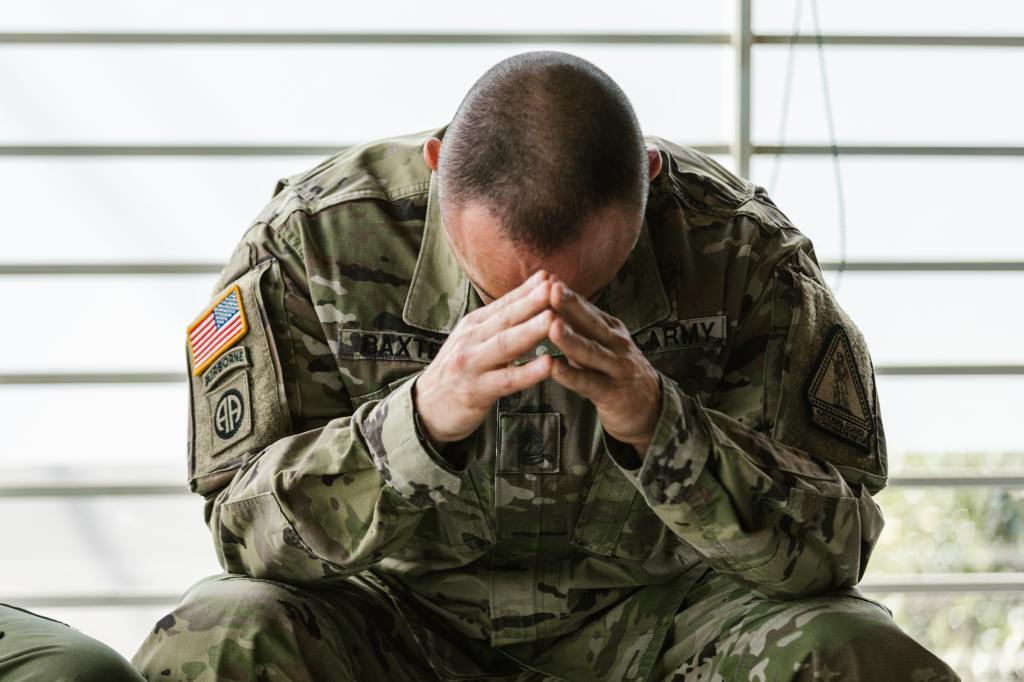
I recall a few times in parenting where I was utterly out of ammunition. All my patience, kindness, wisdom, strategies and energy were drained. I remember one such time dropping to the couch, pressing my head in my hands, as the kids silently gathered around in a circle staring at me. My inward cry was similar to the one above. I was dried up like a parched land and the only hope was that God would show up and infuse me with Himself.

Sometimes the battle reduces us to this point but it doesn’t have to get that desperate for us to stretch out our empty hands toward Him. Early on we can acknowledge that the battle belongs to the Lord and open our empty hands and present our willing hearts to Him.


How to Fight God’s Way : Principle 2

Choose to Remember

I remember the days of old;

I meditate on all that you have done;

I ponder the work of your hands. Ps.143:5

For David, undoubtedly he remembered his victory over Goliath, the anointing by Samuel, his victories in battle. He chose to remember that the great God he experienced then is the same God now. The Goliath-like enemy who has crushed his life to the ground in the present is no different to God than the one whose head David presented to King Saul in the past..

Choosing to remember is very difficult when the battle is in front of us and our adversaries are winning. But remembering is a starting point to arrest the slide into despondency; to remember when I had experienced the power and presence of God, to remember the stories in scripture of others who faced similar opponents, to remember the testimony of others who have believed and persevered and seen God deliver them from their enemies. 

There is a certain amnesia that can come over us when we find ourselves in the midst of the battle. It is very difficult to allow our minds to slow down and ponder on all that God has done in the past. But this is an important element in being trained for war, where the confusion of the battle is quieted by the clarity of the truth about who God is and always will be. If we acknowledge the truth that the enemy is too strong for us, this fact must be counterbalanced and overwhelmed by our re-collection of memories, scriptures and testimonies of God’s sovereign and surpassing strength.


How to Fight God’s Way: Principle 1

The Enemy is too strong for me.

Deliver me from my persecutors,

For they are too strong for me! Ps.142:6b

This is David’s starting point. Without acknowledging that many of his enemies are beyond his strength and capabilities, he will try to fight with his weapons and in his own power. Declaring that the enemy is too strong is not surrendering to discouragement; neither is it meant to suggest that David is giving in to passivity and resignation. David knows that he will need to engage this enemy, but by acknowledging its surpassing strength, he is positioned to allow God to equip him with the weapons and tactics that are suitable. The weapons He may choose may seem inadequate for a Goliath-sized opponent who was far stronger than the young shepherd boy. David’s sling and stones were perhaps even in his own eyes inadequate, but the God he knew was no match for Goliath, not even close. 

Later in David’s life, we read in Ps. 143:3 David’s assessment of the strength of his enemy. 

For the enemy has pursued my soul;

He has crushed my life to the ground;

He has made me sit in darkness like those long dead.

The enemy is too strong. David turns to the God who is and always has been and always will be stronger. It is to this God that he asks, “Train my hands for war and my fingers for battle.” 

It is okay to acknowledge that the enemy is too strong. Like David, this admission positions us to receive God’s training for the battles we face.


How to Fight God’s Way: Introduction

Life is full of battles. There are battles within our own souls, battles against adversaries, battles on behalf of others. Some of these conflicts are visible and external. We are all aware of external wars in our world: battles in Ukraine, Ethiopia, Congo, conflict in the halls of our government, wars within our culture, battles on social media, conflicts inside our homes, even war within our own bodies from sickness and disease. Other struggles are invisible. These are the internal, mental and spiritual wrestlings, which require as much if not more fortitude than the outward contests. David was familiar with external and internal warfare and wrote about it frequently in what we now call the Psalms of David. In Psalm 144:1 David tells us something of God’s role in all these battles:

Blessed be the Lord my rock,

Who trains my hands for war and my fingers for battle.

David viewed God as the One who would rightly train him and equip him for the battles that he would face. In the Psalms of David surrounding this verse lie principles that describe the nature of this training. By looking at these principles together, we may learn how God may want to train us to engage in our own conflicts in His way.

 But before we move on, let me share one of the battle grounds that I faced almost daily for years on end; the battle ground of raising six children. That may sound trivial, but there were indeed many days that my own children felt like an opposing army, firing off bombs of whining and crying, dispatching snipers of sneakiness and lying, and engaging in hand to hand combat of outright defiance and rebelliousness. I recognized quickly that my own tactics in these skirmishes were either mousy and inadequate or cruelly harsh. So Ps.144:1 became personal; please train my hands and my fingers for these battles, not so that I can win but so that they can grow and thrive. 

More currently, even as I write these posts, a battle rages within. Thoughts flood in as I write that what I am writing has no substance, it is poorly written, it has no relevance, no flow. Such thoughts coupled with my own technological limitations and the accompanying shame that those inadequacies produce, can leave me bruised and bloodied. I am actively applying these words as I write them.

 Psalm 142 through 145 records some of the training principles that David was alluding to as he faced external opponents and internal wrestlings. Living in a fallen world means that we will all face adversity. How does God want to train you and me to engage in our own realms of conflict? While these principles that David writes about are by no means exhaustive, they do provide some powerful and surprising insights.

With that as an introduction, let’s consider 14 training principles from the Psalms of David.