How to Fight God’s Way: Principle 7

Bare our Souls

For to you I lift up my soul. Ps.143:8

God is compassionate. In our ongoing struggles, he does not scold us when fears, doubts and emotions may arise. David leads by example through his Psalms on how to express a full range of soul responses to difficult battles.

 The soul is often said to encompass one’s mind (thoughts), one’s will, and one’s emotions. David expresses to God all that is going on within him at all these different levels, without pretending to think or want or feel something that isn’t authentic. He brings his whole self into the light of God’s gaze. Some of what he brings to light is human: natural fears, confusion, anger, doubts. Some of what he brings out of his soul into the light is sinful: blaming, vengefulness, rebelliousness, lies.

In my battles within my family, particularly when parenting children, much of my soul came to light, whether I wanted it to or not. Often what came to light was natural confusion, “I don’t know how to help this child” or natural fear, “I don’t know how to care for this need” or natural doubts,” I don’t feel equipped to parent this child well given my background…” But also when I lifted my soul to God’s holy gaze, other things came into the light; sinful anger, sinful controlling, sinful judging, sinful cowardice, sinful impatience, sinful pride. The children didn’t make me sin. Sin residing within was exposed. Before facing an external enemy, it is important to see and confess those hidden sins. These are enemies within our own souls.


How to Fight God’s Way: Principle 6

Ask for Direction

Make known to me the way I should go. Ps.143:8

Once we trust him, we are in a position to ask for his direction. It is easiest to take advice, when the advice given basically agrees with what we were thinking. It is quite a bit harder when the way that God is indicating is his way to fight our battle, seems illogical. Do I truly trust that God knows better than I do how to defeat my enemies even when his direction doesn’t make sense? Scripture is full of examples of those who listened to God’s unorthodox battle plans: David confronting the giant with a sling and stones, Moses’ arms being supported by Aaron and Hur so that Amalek might be defeated, Jehasophat sending out the worshippers to lead the battle, Joshua marching around the walls of Jericho seven times, Gideon sifting his fighting force to 300. In God’s training our hands and fingers for battle, he may lead us to employ unexpected, unconventional strategies. 

With one of my children the battle to expose what was causing her behavior was waged in fasting and prayer. With another child, the battle was waged with love. This became clear when the Lord spoke these words to my spirit; “You need to love him and I will discipline him”. In my own fight against fear, the battle was fought with the proclamation of scripture. In another arena, I am contending in prayer with others for our children’s spiritual lives. In my marriage, I have been exhorted to speak the truth in love rather than hiding and absorbing what might be unpleasant to share. I have written letters to politicians, anointed spaces with oil and invoking the presence of the Holy Spirit, read scriptures aloud, sung, knelt, cried. 

In asking for direction, be prepared for an answer you might not have expected.


How to Fight God’s Way: Principle 5

Trust his love

Let me hear in the morning of your steadfast love,

for in you I trust. Ps.143:8

 Before David listens for the answer to his dilemma or sees deliverance from his enemies, his deepest need is to be assured once again of the faithful love of his God. David truly was a man after God’s own heart and his heart’s desire, morning after morning, was to affirm and be tethered to God’s unfailing love. His crying out to God was borne out of his surpassing need for an intimate, secure, unsullied relationship with the God whom he loves. The God whose love is unfailing is the God whom he can trust.

Do I trust wholly in God in the midst of my battles? Do I trust his wisdom; do I trust his strength; do I trust that his intentions toward me are good; do I trust in his unfailing love? It is difficult if not impossible to ally ourselves to a God whom we do not trust, whose love we doubt.

This is the battle within the battle. Often when we face adversity and enemies, there is the temptation to question whether God truly loves us. “If he loves me, why is this happening?” “If he loved me, he would have delivered me by now.” The battle within the battle is to continually seek to be reminded of God’s promised, unbreakable, unfailing love in Christ and to believe that it is true. Romans 8:35-39


How to Fight God’s Way: Principle 4

Watch and Listen

Answer me quickly, O Lord!…

Hide not your face from me…

Let me hear in the morning of your steadfast love… Ps.143:7,8

Implicit in seeking God is that we are available for him to answer us. We expect him to respond; we expect to see and hear with our spiritual eyes and ears; we will remain in a posture of expectancy even though we are dangling on the precipice of despair, like David, who lets God know that his spirit fails! He finds himself hanging on by a thread in the face of his enemies. This battle is difficult and very real. David is a real man, with real emotions, calling out to the real God, but he is not sure how much longer he can hang on.

 I have certainly found that the cacophony of the battle, whether it is internal or external, has obscured my ability to see and hear. For me, I need to withdraw into silence and solitude, often in the late night hours, when the household is asleep, to begin to hear a voice other than my own cry for help, and see more than the enemies arrayed against me. Silence, scripture, solitude are ways for me to see and hear.


How to Fight God’s Way: Principle 3

Earnestly Seek God

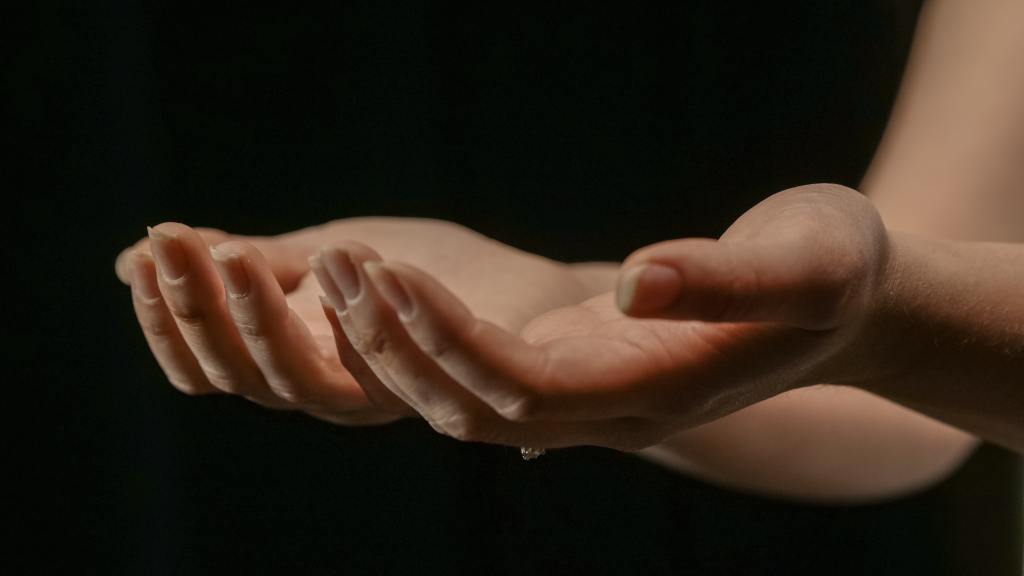
I stretch out my hands to you;

My soul thirsts for you like a parched land. Ps.143:6

This is the prayer of desperation. There is no Plan B. If God doesn’t come through, the enemy wins. How God comes through is up to Him. It could be a miraculous intervention, it could be through the help of another, it could be by giving us an idea or tactic that we had never thought of before, it could be through a scripture that sparks hope and help, it could be through a word spoken in our spirit by the Helper, the Holy Spirit, it could be by supplying strength and the ability to persevere that is not our own, or something else. 

I recall a few times in parenting where I was utterly out of ammunition. All my patience, kindness, wisdom, strategies and energy were drained. I remember one such time dropping to the couch, pressing my head in my hands, as the kids silently gathered around in a circle staring at me. My inward cry was similar to the one above. I was dried up like a parched land and the only hope was that God would show up and infuse me with Himself.

Sometimes the battle reduces us to this point but it doesn’t have to get that desperate for us to stretch out our empty hands toward Him. Early on we can acknowledge that the battle belongs to the Lord and open our empty hands and present our willing hearts to Him.


How to Fight God’s Way : Principle 2

Choose to Remember

I remember the days of old;

I meditate on all that you have done;

I ponder the work of your hands. Ps.143:5

For David, undoubtedly he remembered his victory over Goliath, the anointing by Samuel, his victories in battle. He chose to remember that the great God he experienced then is the same God now. The Goliath-like enemy who has crushed his life to the ground in the present is no different to God than the one whose head David presented to King Saul in the past..

Choosing to remember is very difficult when the battle is in front of us and our adversaries are winning. But remembering is a starting point to arrest the slide into despondency; to remember when I had experienced the power and presence of God, to remember the stories in scripture of others who faced similar opponents, to remember the testimony of others who have believed and persevered and seen God deliver them from their enemies. 

There is a certain amnesia that can come over us when we find ourselves in the midst of the battle. It is very difficult to allow our minds to slow down and ponder on all that God has done in the past. But this is an important element in being trained for war, where the confusion of the battle is quieted by the clarity of the truth about who God is and always will be. If we acknowledge the truth that the enemy is too strong for us, this fact must be counterbalanced and overwhelmed by our re-collection of memories, scriptures and testimonies of God’s sovereign and surpassing strength.


How to Fight God’s Way: Principle 1

The Enemy is too strong for me.

Deliver me from my persecutors,

For they are too strong for me! Ps.142:6b

This is David’s starting point. Without acknowledging that many of his enemies are beyond his strength and capabilities, he will try to fight with his weapons and in his own power. Declaring that the enemy is too strong is not surrendering to discouragement; neither is it meant to suggest that David is giving in to passivity and resignation. David knows that he will need to engage this enemy, but by acknowledging its surpassing strength, he is positioned to allow God to equip him with the weapons and tactics that are suitable. The weapons He may choose may seem inadequate for a Goliath-sized opponent who was far stronger than the young shepherd boy. David’s sling and stones were perhaps even in his own eyes inadequate, but the God he knew was no match for Goliath, not even close. 

Later in David’s life, we read in Ps. 143:3 David’s assessment of the strength of his enemy. 

For the enemy has pursued my soul;

He has crushed my life to the ground;

He has made me sit in darkness like those long dead.

The enemy is too strong. David turns to the God who is and always has been and always will be stronger. It is to this God that he asks, “Train my hands for war and my fingers for battle.” 

It is okay to acknowledge that the enemy is too strong. Like David, this admission positions us to receive God’s training for the battles we face.


How to Fight God’s Way: Introduction

Life is full of battles. There are battles within our own souls, battles against adversaries, battles on behalf of others. Some of these conflicts are visible and external. We are all aware of external wars in our world: battles in Ukraine, Ethiopia, Congo, conflict in the halls of our government, wars within our culture, battles on social media, conflicts inside our homes, even war within our own bodies from sickness and disease. Other struggles are invisible. These are the internal, mental and spiritual wrestlings, which require as much if not more fortitude than the outward contests. David was familiar with external and internal warfare and wrote about it frequently in what we now call the Psalms of David. In Psalm 144:1 David tells us something of God’s role in all these battles:

Blessed be the Lord my rock,

Who trains my hands for war and my fingers for battle.

David viewed God as the One who would rightly train him and equip him for the battles that he would face. In the Psalms of David surrounding this verse lie principles that describe the nature of this training. By looking at these principles together, we may learn how God may want to train us to engage in our own conflicts in His way.

 But before we move on, let me share one of the battle grounds that I faced almost daily for years on end; the battle ground of raising six children. That may sound trivial, but there were indeed many days that my own children felt like an opposing army, firing off bombs of whining and crying, dispatching snipers of sneakiness and lying, and engaging in hand to hand combat of outright defiance and rebelliousness. I recognized quickly that my own tactics in these skirmishes were either mousy and inadequate or cruelly harsh. So Ps.144:1 became personal; please train my hands and my fingers for these battles, not so that I can win but so that they can grow and thrive. 

More currently, even as I write these posts, a battle rages within. Thoughts flood in as I write that what I am writing has no substance, it is poorly written, it has no relevance, no flow. Such thoughts coupled with my own technological limitations and the accompanying shame that those inadequacies produce, can leave me bruised and bloodied. I am actively applying these words as I write them.

 Psalm 142 through 145 records some of the training principles that David was alluding to as he faced external opponents and internal wrestlings. Living in a fallen world means that we will all face adversity. How does God want to train you and me to engage in our own realms of conflict? While these principles that David writes about are by no means exhaustive, they do provide some powerful and surprising insights.

With that as an introduction, let’s consider 14 training principles from the Psalms of David.


Consider the Vine

There are multiple characters in the allegory of the vineyard in scripture. There is the vineyard owner, also known as the vinedresser. There are also the vine, the branches, the sap that flows from the vine to the branches and finally the fruit. Let’s consider together the second character in this depiction, the vine.

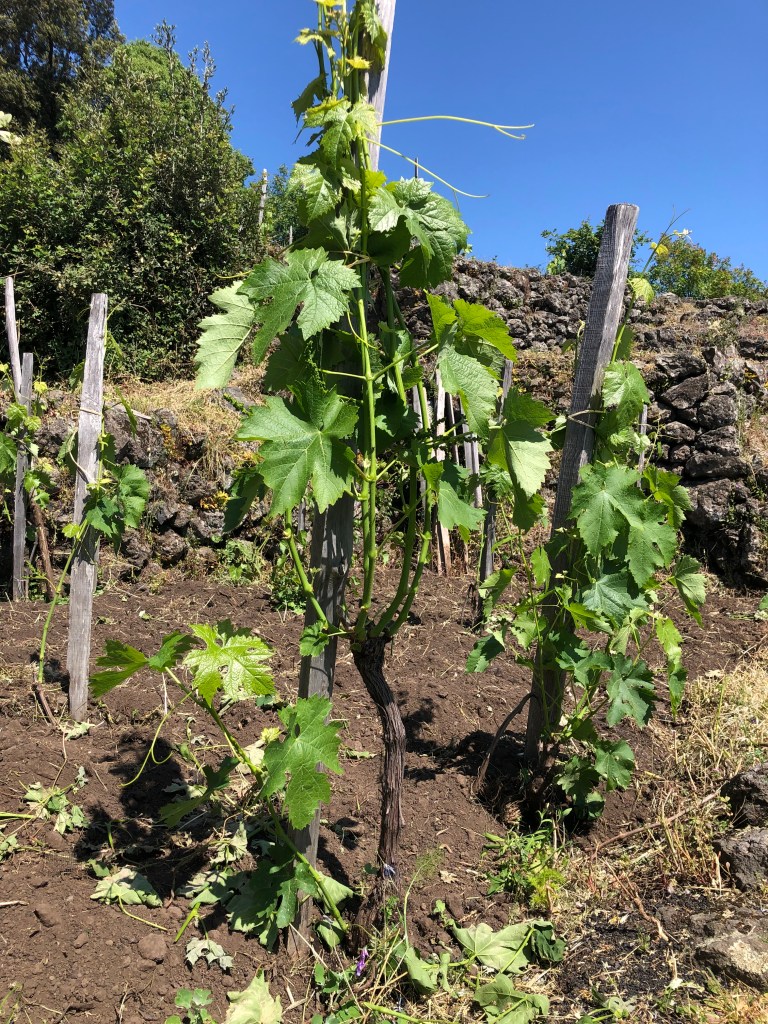
As we walked with our Sicilian vineyard owner friend among his beloved vines in mid- May, they weren’t much to look at. They were all sprouting light green supple branches, but the vines themselves were gnarled and covered with shaggy brown bark. It was a bit of a surprise to hear our host Ooo and Ahh over their appearance, “Isn’t she beautiful?” Some were upwards of a hundred years old and certainly looked it, bent and curved under the strain of years of growth. But beauty is as they say in the eye of the beholder and this vinedresser appreciated the beauty of each of his vines as they responded to his care and rewarded him with exquisite grapes. 

As Jesus led his confused disciples from the Passover meal to the Garden of Gethsemane, many believed that they walked through a vineyard as they crossed the Kidron Valley. In the midst of the vines, on the night of his betrayal and arrest, he spoke these words,

“I am the true vine and my Father is the keeper of the vineyard… I am the vine and you are the branches.” Jn.15:1,5 I am the vine, I am the true vine. 

Jesus, the true vine, was beautiful in the eyes of His Father. But to the world, he was merely a gnarled, shaggy, unattractive man.

“ For he grew up before him like a young plant,

And like a root out of the dry ground;

He had no form or majesty that we should look at him,

And no beauty that we should desire him.” (Isa.53:2)

And yet it is through this One, who called himself the true vine, that all the riches of God’s grace and mercy, all the privileges of adoption and inheritance, all of the fulfillment of bearing fruit that will remain, emanates. 

The only means for the vinedresser to receive the fruit of the vineyard, the only way for the branches to bear and carry fruit, is through the vine. The vine is the source of nourishment. The vine is the source of support. The vine is the conduit through which all that the branches need is delivered. Apart from the vine, the branches can produce nothing. All the benefits of the vinedresser’s nurturing, watering, fertilizing and tilling are received by the branches through the vine. 

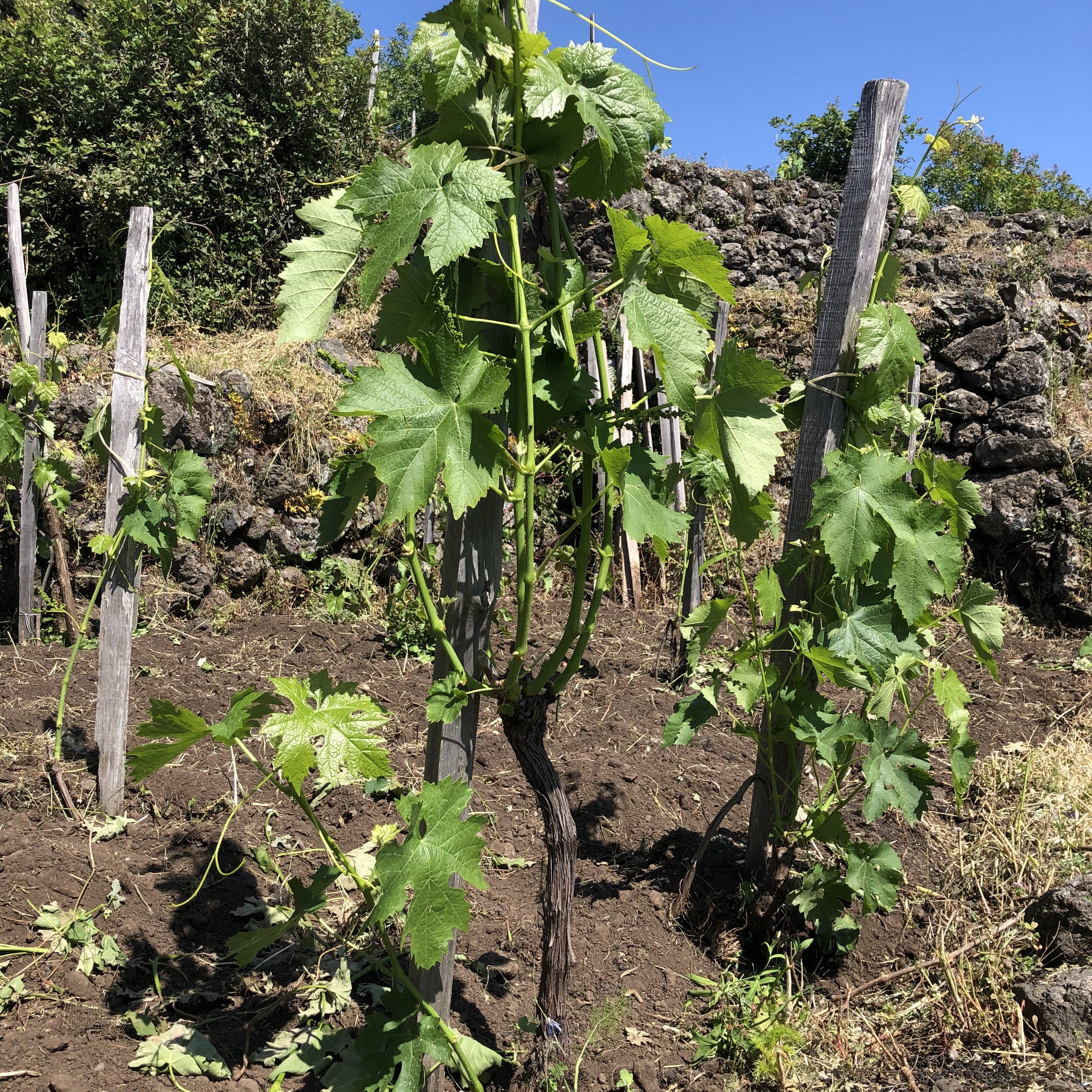
As we walked with our host through his vineyard, watching as he tended and tied up the branches, we noticed that he examined each vine to see the place from which the branches were growing. “All the branches that are to be kept grow from above the pruning line. All those that grow below are suckers and need to be taken off.” On each of his vines was a place where at some point in its growth it had been cut off and all the new fruit-bearing growth emanated from above that line. The pruning line was the point of demarcation to distinguish between true branches and suckers.

The point of demarcation for the first disciples and every disciple of Jesus since then, is the cross of Christ, where the Son of God was cut off so that we, the branches, might have life. All true life emanates from this point. 

“By oppression and judgment he was taken away

and as for his generation, who considered

that he was cut off out of the land of the living,

stricken for the transgression of my people?” (Isa.53:8)

The apostle Paul, repeatedly and emphatically testified and taught that the cross, where our Lord sacrificed his life on our behalf, being cut off out of the land of the living, is the only source for our lives as “true branches of the true vine”.

“But far be it from me to boast except in the cross

of our Lord Jesus Christ, by which the world has been crucified 

to me, and I to the world.

For neither circumcision counts for anything nor uncircumcision,

but a new creation.” (Gal.6:14,15)

The new creation begins where the true vine was cut off. Any other connection point to the vine was deemed invalid by the vineyard owner. No matter how lush those branches appeared, he removed them. “They must be connected to the vine above the pruning line,” he insisted as he cast the verdant suckers off. We too must be connected to the life of God through the death of his one and only Son. This is where the new creation life begins. This is where fruit bearing life is made possible.

Some of the vines in the restored vineyard were upwards of a hundred years old. Year after year new branches came and after a season of fruitfulness, they died back and were removed. But the vine remains as the enduring source of life for all branches past, present and future. 

Jesus is the true and oldest vine, the source of our life, our vigor, our fruitfulness. It all comes through Him. Without the vine, there is no life. 

“In the beginning was the Word, and the Word was with God, and the Word was God. All things were created through him… In him was life, and the life was the light of men. ( Jn1:1,3,4)

And from his fullness, we have all received grace upon grace. (Jn.1:16)

All that we need for eternal life and fruitful life is supplied through the vine. All we are to do is to receive and live in his supply of grace upon grace.

What about you? What is your relationship like with the true and oldest vine, Jesus?


Consider the Branches

On our trip to Sicily, our accommodations were overlooking a rugged, terraced vineyard. Our host was the owner and keeper of the vineyard. Our time there gave us an in depth, real life experience of John 15, which records Jesus giving his disciples a final depiction of his relationship with them. “I am the true vine and my Father is the vinedresser.” In previous posts I have coupled my insights from a Sicilian vineyard with John 15’s imagery of the Father as the vinedresser and Jesus as the true vine. A third character in the allegory of the vineyard is the branches. Verse five states, “I (Jesus) am the vine; you (his disciples) are the branches.” 

We intercepted the growth of the vineyard in mid-May. The branches, emerging out of the vine were young and supple, sprouting bright green leaves and tiny grape clusters. The branches that would be kept and protected were those that were connected to the vine above the pruning line (see Consider the Vine post). At this stage of their early growth, the slender branches were particularly vulnerable to wind or heavy rain detaching them from their fragile connection to the vine. So our vinedresser friend tenderly lifted up these young branches and gently tied them to a central stake so that their growth in connection to the vine would be protected and deepened as the branches matured and the grapes grew heavy.

Everything that the branches receive for growth and fruit bearing is dependent upon a secure connection to the vine. In John 15 Jesus used the word abide ten times in verses one through ten to describe this vital connection. Abide is a poorly understood English word. The Greek word “meno” can also be translated, to dwell, to maintain unbroken fellowship with one, to put forth constant influence upon one, holding and maintaining unbroken communion. These additional descriptions fill out an understanding of what it means to abide. 

“Abide in me and I in you. As the branch cannot bear fruit by itself, unless it abides in the vine, neither can you unless you abide in me.” (John 15:4)

The point of connection between the vine and the branch is critical. It is a connection that needs to be maintained, protected and deepened so that sap may freely flow up through the vine and into the branch. A weakened or partial connection means limited flow of sap from the vine into the branch, which results in poor growth, less fruit.

 Unlike vegetative branches, human branches have responsibilities in maintaining a vital connection of unbroken communion with Jesus, the true vine. “If you abide in me and my words abide in you…” Having his words “put forth constant influence upon us” is one of the ways that the vital connection between the vine and the branch is maintained and deepened. His words are living, carrying his very life, transforming us as we allow them to flow through our minds so that they may become written on our hearts. Through reading and study, memorizing and meditating on his words, which are contained in all of the Bible, our connection to him becomes more and more secure. 

Another way that the connection between a human branch and Jesus the vine is deepened is by abiding in his love. 

“As the Father has loved me, so I have loved you, abide in my love.”

John the apostle repeats this thought in his letter of 1 John.

“So we know and believe the love God has for us. God is love and he who abides in love, abides in God and God abides in him.” (1 John 4:16-17)

  Abiding in God’s love is as essential to our connection, communion and spiritual vitality as sap is to the branch. Without it we wilt under duty, shame and condemnation. Knowing about God’s love is comparatively easy; believing it can be quite another matter. For me as a young follower of Jesus, I recognized that I could know facts about the love of God, but believing that his love applied to me was much more difficult. However I knew that without having a growing trust that believed in his love, I would be perpetually stunted in my growth.  So I asked him to help break open the barrier between my head and my heart, so that what I gained in knowing about God’s love in my mind and through my experiences might become an unshakable belief within the depths of my heart. I continue to ask to know more and believe more deeply in the love of Christ, its length and breadth, its height and depth, so that I might be a fruit filled branch.

Yet another way that we deepen our connection and open the channel for his life to flow through us is by obeying his commands. Obedience can be simply understood as trusting what God says and doing it. 

“If you keep my commandments, you will abide in my love, just as I have kept my Father’s commandments and abide in his love. (John 15:10)

“If anyone loves me, he will keep my word, and my Father will love him, and we will come to him and make our home with him.” (John 14:23)

These words flow back and forth into one another; keeping his word, remaining in his love, abiding, making our home with him. It is hard to see where one begins and another ends. Keeping his word is love. Love is keeping his word. Obedience is abiding in his love. Abiding is a loving result of obedience. Rather than creating an equation to determine what is a result of which, there is an organic, fluid transfer of life and love, submission and dependence, trust and belief. Just as the branch trusts the vine to supply what is needed and is satisfied with its need to be deeply connected to and dependent upon the vine, so too we as living branches are to become enmeshed into the life of Christ through believing, trusting, submitting to and obeying his commandments. James writes about these same thoughts in this way,

“But be doers of the word and not hearers only… the one who looks into the perfect law, the law of liberty, and perseveres, being no hearer that forgets but a doer that acts, he will be blessed in his doing.” (James 1:22,25)

The blessing of being a doer of the word is his promise to make his home in us, his life, his love, his spirit is all that we need.

As branches of the true Vine we have looked at our part in securing our connection to Jesus: abiding in his word, abiding in his love and keeping his commandments. Along with these, we are also invited to ask.

“If you abide in me and my words abide in you, ask whatever you wish, and it will be done for you.” (John 15:7)

“You did not choose me, but I chose you and appointed you that you should go and bear fruit and that your fruit should abide, so that whatever you ask the Father in my name, he may give it to you.” (John 15:16)

My first ask is for his help with the above three elements of abiding. I need his help, strength, courage, discipline, trust, etc. to abide in his word, abide in his love and to obey his word. Even these are not within my capability to fulfill. God knows that. 

“For apart from me, you can do nothing.” (John 15:5)

A plant branch is able to a certain extent to supply some of its own needs through photosynthesis from the leaves. Nevertheless, if it is cut off from the vine, it will wither and die. Of course we all can do certain things to maintain our practical lives and our spiritual lives. But fundamentally, if we are severed from Christ, his power, his strength, his love, his grace, we will fail and fall. “Such branches wither, are gathered, thrown into the fire and burned.” (John 15:6) Of course we need his help and life even for those things that he calls us to. I need his focus and discipline as I try to read scripture in a way that allows him to speak through it. I need courage and trust to obey his word, especially when it runs counter to my own thoughts or feelings. I need his help to believe the depths of his love and forgiveness, especially when I have messed up or failed in some way. We are instructed to ask, and to keep asking. Our asking is not met with reluctance or begrudging but with willing generosity that flows from his abundant grace.

“Ask and receive, that your joy may be full.” (John 16:24)

As we walked through the vineyard, securing the spring branches, removing suckers which would draw precious energy away from the production of grapes, our friend also removed many of the leaves that might shade the developing grapes from the sun. Pruning. It is a seemingly cruel practice and yet it is an absolute necessity no matter what crop is being grown. 

“Every branch that does bear fruit he prunes, that it may bear more fruit.” (John15:2)

All gardeners must learn this harsh practice of removing what appears to be perfectly good growth for the sake of even better growth, be it flowers or fruit. The vinedresser knows what he is doing and though it appears for a time to be hurtful to the plant, it will actually allow the plant to grow fuller and become more fruitful. I thought that my career would be my most fruitful expression until it was pruned and redirected toward raising children. At the time, this pruning was painfully received by trusting that my Father knew what he was doing. Little did I know, nor could I have imagined six children and 10 grandchildren later. Indeed the pruning shears cut deeply into all of his branches, lopping off dreams, possessions, relationships, capabilities… many of which seem to be perfectly good and healthy and beautiful. I do not mean to trivialize the pain of these losses. Pruning is seemingly cruel and unnecessary. Getting to know and trust the Vinedresser and his Vine is crucial in receiving the benefits of the pruning. 

What about you? 

How is your connection to the Vine? Is it deepening? Are there areas in which the connection is weak? Is it in the area of abiding in his love? How are you allowing his words to abide in you? Are you well connected to Jesus by doing what he is asking? Have you acknowledged your need for his help and have you specifically asked for his help? Is there a circumstance in your life that feels like pruning? How are you at receiving his pruning? 

Can you trust the Father’s intentions as you go through a period of loss?

Life as a branch of the true vine is not easy, but it is good and satisfying. Through our lives the Father will receive glory and this is our greatest and most honorable purpose! 

“By this is my Father glorified, that you bear much fruit and so prove to be his disciples.” (John 15:8)